Invisible Traffic, Visible Insights - Episode 1
Deep Packet Inspection has been declared dead more times than anyone can count. Two people who have spent their careers inside it say it is about to matter more than ever, and that AI is the reason.
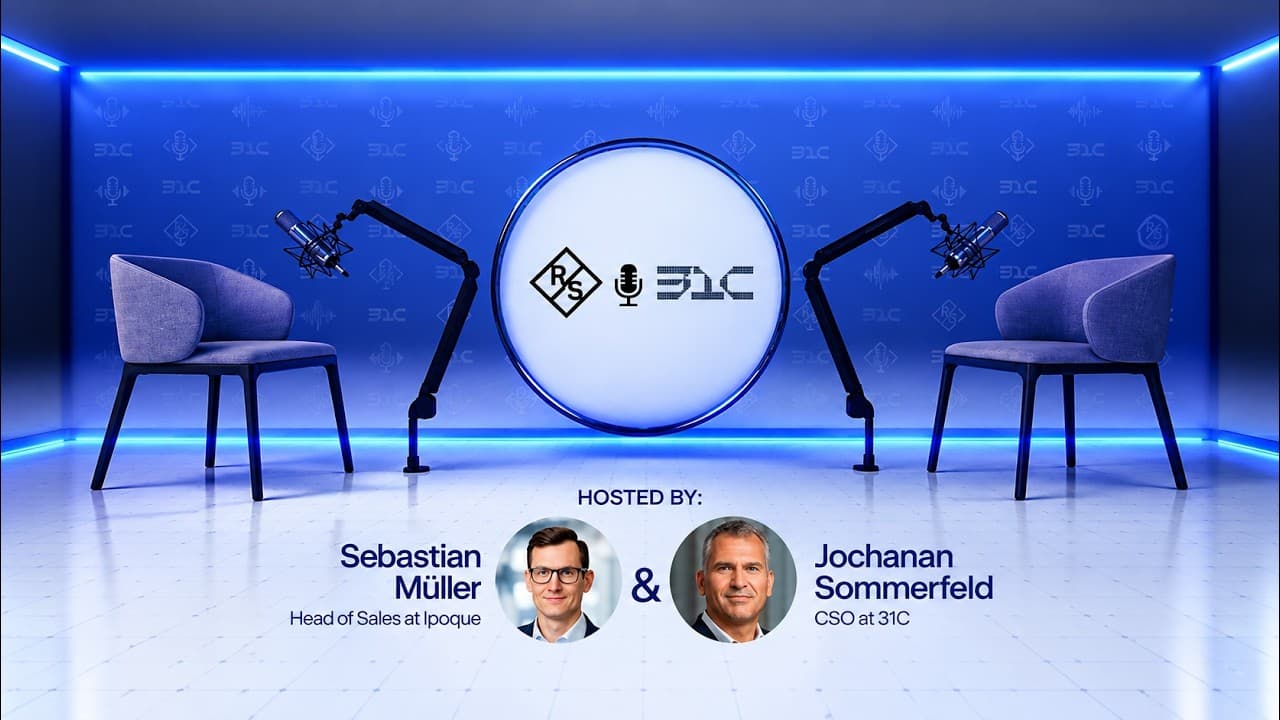
Half of the internet is no longer human, and almost all of it is encrypted. That is the starting point of Invisible Traffic, Visible Insights, a new conversation series between two veterans of network intelligence.
Jochanan Sommerfeld is Chief Strategy Officer of 31 Concept (31C), the company behind the ODUN.ONE platform. He has worked in network security for thirty years, starting at a time when everything on the wire was plain text. Sebastian Miller has been at Rohde & Schwarz since 2010 and has worked on packet inspection from his first day there.
The two say they are not there to sell anything. The series grew out of the conversations they usually have over dinner, now opened up to the wider community.
While we were arguing about chatbots and AI, the network became blind to us.
Jochanan Sommerfeld, 31C
The technology that refuses to die
DPI survives because it was never one fixed technology. It is a set of methods for understanding IP traffic, and those methods have to be rebuilt each time the traffic changes.
Every month there’s another group of people declaring DPI dead, or dead a week from now. But it’s not.
Sebastian Miller, Rohde & Schwarz
Miller traces the arc. In 2005, it was enough to tell HTTP from FTP in plain text. Five years later encryption surged, then came TLS 1.3, and now a wave of AI bots and agentic traffic. Each shift forced new ways of seeing.
You have to build up new methodologies in order to understand what is going on, and those methodologies need to work in combination. In other words, it is classic reverse engineering.
Sebastian Miller, Rohde & Schwarz
Sommerfeld describes the same journey as a change of instrument. DPI began as a microscope that could read every detail. Today it works more like a profiler: less about reading the content, more about recognising the shape.
Four breakpoints, one underestimated
Sommerfeld names four moments that reshaped network traffic:
Encryption, from the first SSL to TLS 1.3 and QUIC.
Cloud, as almost everything moved there over the last decade.
The Internet of Things, and the flood of machine-to-machine traffic.
AI, now moving to the front.
He adds an extreme example from mobile networks. In 4G, operators could sit passively and read control-plane signalling to tie traffic to subscribers. In 5G, even the control plane moves to TLS.
Asked which shift the industry underestimated most, Miller does not hesitate.
I strongly believe all humans totally underestimate AI, also the people in Silicon Valley. Way more than ninety percent of people do not know what is in front of us.
Sebastian Miller, Rohde & Schwarz
It will be the biggest revolution we have seen in decades. And with that, it’s a given that it will also become the biggest challenge for DPI. So the answer is very simple: it’s AI.
Sebastian Miller, Rohde & Schwarz
Reading the shape, not the content
Sommerfeld sees three common reactions to the encrypted network, and rejects all of them. Some operators hoard traffic they will never be able to use. Some still believe in large-scale decryption, which he calls wrong by design and a risk even for the equipment vendors. Others simply give up.
The alternative is to read traffic’s body language: timing, packet sizes, handshake rhythm. He offers an analogy.
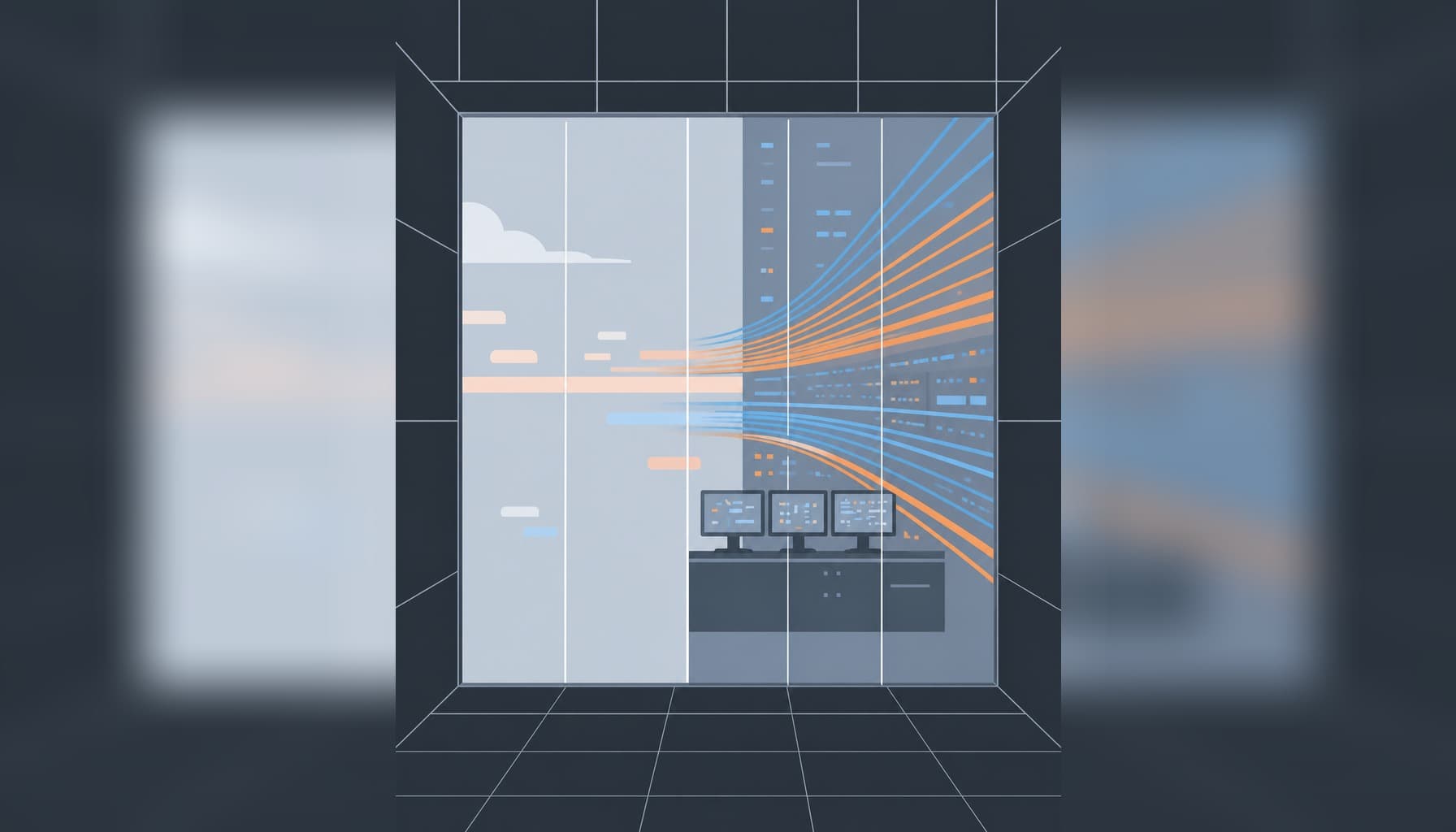
Two people stand behind a soundproof window. You cannot hear what they say, but you can still read a lot: who is talking more, whether someone is angry. There is a lot you can read from the shape without the content.
Jochanan Sommerfeld, 31C
With Encrypted Client Hello removing one of the last clear signals, the host name, Miller is candid about how little remains. What fills the gap is machine-learning-backed decision making, built on expertise that cannot be improvised.
This is nothing you can do from scratch, even if you are a genius. It has grown from fundamental expertise built up over decades.
Sebastian Miller, Rohde & Schwarz
He also stresses what customers actually buy.
Customers are not ordering a DPI system. They are ordering a system that is capable of classifying traffic.
Sebastian Miller, Rohde & Schwarz
And that is where the business value sits. Nobody needs to know what two people say on a video call. An operator does want to know that the call is happening, so it can prioritise it, protect quality and reduce churn.
AI must watch AI
AI is both the problem and the answer. A single question to an AI agent can set off a burst of machine-to-machine queries, and only models can keep up with that.
AI needs to watch AI. Otherwise you will not be able to deal with what is coming. And whoever owns the right models probably owns the view.
Jochanan Sommerfeld, 31C
Miller expects no dramatic change in the next few months, only an extension of today’s tools. In two to three years, he expects much of what is now unforeseen to arrive, and the contest to shift.
It’s not so much about technology. It’s about pace. It’s the game of who is faster.
Sebastian Miller, Rohde & Schwarz
Sovereignty: who watches when data moves
Sommerfeld closes on sovereignty, which he separates from nationalism.
Sovereignty is the right to see and to control your network.
Jochanan Sommerfeld, 31C
Regulation such as GDPR already governs where data sits. What is missing, he says, is who watches it while it moves. Miller expects that gap to close within two to four years, because it is a matter of national security that companies will not solve on their own.
If you leave the decision to the companies, they will not decide for the purpose of national security. Their purpose is profit. This is why governments need to put law into effect.
Sebastian Miller, Rohde & Schwarz
He expects recent moves by big tech to push this faster than many think, especially in Europe. Sommerfeld sees two lines crossing: operators can see less of their networks every year, while regulators demand more protection for society. Capabilities and needs are out of step, and that tension is where the series will pick up next.